





 Login/Register

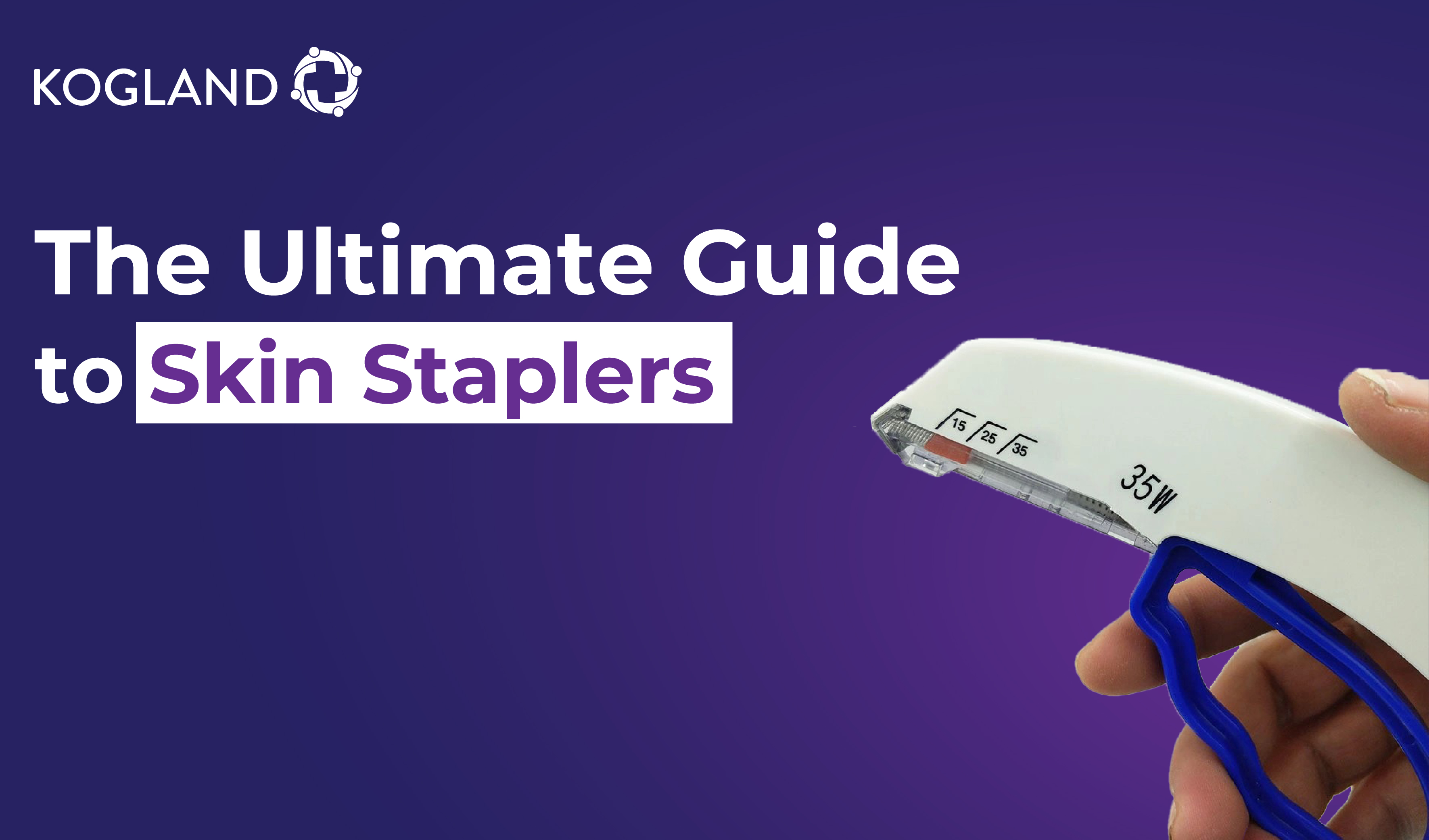
The Ultimate Guide to Skin Staplers
 Mar 14, 2024
In the ever-evolving landscape of medical technology, the transition from traditional sutures to skin staplers represents a significant leap in surgical efficiency and patient care. This shift, which began gaining momentum in the late 20th century, marked a transformative period in surgical procedures, offering an innovative solution to the age-old challenge of wound closure.
The inception of skin staplers can be traced back to the mid-1900s, a period characterised by rapid advancements in medical tools and techniques. Pioneered initially for gastrointestinal surgeries, the concept of using staplers as a means of joining tissues was revolutionary. It offered a stark contrast to the intricate and time-consuming process of suturing, a method steeped in history but not without its limitations.
Skin staplers emerged as a game-changer, particularly in the 1970s and 1980s, when their use expanded beyond specialised surgeries to more general applications. The advantages were immediately evident. For medical professionals, these devices not only sped up the process of wound closure but also brought a level of consistency and precision that was challenging to achieve with traditional suturing. The mechanical simplicity of staplers allowed for quicker operations, reducing time under anaesthesia and subsequently, the risk of complications.
The edge that skin staplers provided was multifaceted. In addition to speeding up surgical procedures, they offered a more standardised and reproducible method of wound closure. This uniformity was crucial in minimising scarring and improving cosmetic outcomes - a significant consideration in surgeries where appearance mattered.But does that mean staplers are better than sutures in cosmetic surgeries? What does its ease of use and reduced tissue handling imply for infection risk, a paramount concern in any surgical procedure? Let’s answer these questions and more as we find out more about skin staplers.

Skin Stapler Types and Their Applications
There isn’t a universally approved classification system for types of skin staplers. However, most of the relevant types of skin staplers have been differentiated and discussed here under 3 classification systems for convenience and overall ease of understanding.
Classification by Design and Functionality
The first type is the user-friendly Skin Stapler, specifically designed for external use (closing skin wounds) and rapid closure. They are commonly used in emergency rooms and also for surgical skin closures, particularly in orthopaedic and general surgeries. They are valued for their speed and ease of use, especially in situations requiring quick closure to reduce the risk of infection.
Endoscopic Staplers : These are specialised staplers used in endoscopic surgeries. They are designed to be inserted through narrow tubes and allow for internal stapling in a minimally invasive manner. They are crucial in laparoscopic surgeries such as appendectomies, cholecystectomies, and bariatric surgeries. They provide the benefit of less post-operative pain and faster recovery due to their minimally invasive nature.
Specialty Staplers: These staplers are designed for specific and often more complex surgical applications such as procedures like hemorrhoidectomy or lung surgery. They are tailored to meet the unique requirements of these specialised surgeries.
Linear vs Circular Staples
Linear staplers are designed to deliver a straight line of staples. They are commonly used in both open and minimally invasive surgeries. Their precision and uniformity make them ideal for delicate procedures. They are primarily used for wound closures in abdominal, gynaecological, and thoracic surgeries.
Circular staplers, on the other hand, are specialised for creating end-to-end, side-to-end, and side-to-side anastomoses, particularly in gastrointestinal surgeries. They are widely used in colorectal, gastric, and esophageal surgeries as well as procedures requiring precise circular anastomoses, like bowel resections or gastric bypass surgeries.
Classification by material
Titanium Staplers are widely used due to their biocompatibility, strength, and minimal tissue reaction and are suitable for patients with metal sensitivities.
Stainless Steel Staples are commonly used in general surgeries and are known for their strength and reliability.
Absorbable Staples are ideal for internal use where staple removal is not feasible like bowel or lung surgeries, where natural healing is preferred.
Skin Staplers could be further classified based on specificity of use. A few examples include
Pediatric Staples, which are designed for smaller, delicate pediatric surgical needs, are less invasive and more suited to the sensitive skin of children.
Cosmetic Surgery Staples are used in cosmetic surgeries for minimal scarring and precise closure.
Disposable vs. Reusable Staplers
Disposable staplers are used once and discarded, ensuring sterility whereas reusable ones are sterilised and reloaded for multiple uses. The latter is cost-effective for facilities with high surgical volumes and the choice between disposable and reusable often depends on the healthcare facility's preference, cost considerations, and the specific surgical environment.
Adjustable Width and Compression Staplers allow surgeons to control staple width and compression based on the surgical requirement, enhancing versatility in wound closure.
Skin Staples vs Sutures
Understanding the differences between skin staples and sutures along with the distinct advantages and limitations of each is crucial for medical professionals to make informed decisions before a procedure. In emergency rooms where speed is of the essence or when anaesthesia time is a major determinant, staplers reveal their usefulness. However the precision and dexterity that come from the meticulous mind of a skilled surgeon while suturing can be irreplaceable in situations of cosmetic importance or facial surgeries. Let us explore the pros and cons of both staples and sutures in various surgical scenarios.
- Speed and Efficiency
Staplers offer rapid wound closure, significantly reducing operating time. Ideal in emergency surgeries (post trauma) or where time is a critical factor (like closure of abdominal incisions under anaesthesia) whereas sutures are more time-consuming and require meticulous technique. However, they provide more control in delicate or intricate procedures.
- Cosmetic Outcomes
Staplers may leave more noticeable scars than sutures.Hence they are suitable for areas where cosmetic outcomes are less of a concern while sutures are preferred in plastic or cosmetic surgeries due to finer, less noticeable scarring.
- Ease of Use
Staplers are easy to use and require less skill, making them a popular choice in fast-paced environments like emergency rooms. Sutures, on the other hand, require more skill and training, especially for complex stitching patterns.
- Infection Risk
Staples have a lower risk of infection due to minimal tissue handling and shorter exposure time as compared to sutures, which have a potentially higher risk, especially if the procedure is lengthy.
- Tissue Trauma
Staplers may cause more tissue trauma compared to sutures, particularly in sensitive areas whereas sutures allow for gentler tissue handling making them preferable in handling delicate tissues.
- Cost and Accessibility
Staplers are generally more expensive than sutures, but the time saved can offset the cost. Sutures, on the other hand, are widely available in various materials and sizes.
Needless to say, skin staplers have revolutionised surgical procedures, offering a fast, efficient, and reliable method for wound closure. They have become indispensable in scenarios where time is of the essence, such as in emergency surgeries or large-scale operations. While they may not always be suitable for surgeries where cosmetic outcomes are a primary concern, their contribution to the medical field in terms of operational efficiency and patient safety is undeniable.
The Safety Considerations for Using Skin Staplers

When integrating skin staplers into surgical procedures, it's paramount to consider their safety implications. While skin staplers offer numerous advantages, understanding and mitigating potential risks with the following safety considerations ensure patient safety and optimal outcomes.
Proper Training and Usage
Surgeons and medical staff must be thoroughly trained in the correct use of skin staplers as misaligned staples or incomplete wound closure can lead to serious postoperative complications.
Assessing Wound Suitability
Not all wounds are appropriate for stapling. Deep or irregularly shaped wounds might require sutures for more precise closure.
Sterility and Infection Control
Ensuring that disposable staplers are sterile and that reusable staplers are properly sterilised is crucial to prevent infections.
Allergic Reactions and Biocompatibility
Consideration of the patient's allergies, especially to metals, is vital. Titanium or absorbable staples may be preferable in sensitive cases.
Removal and Post-Operative Care
Educating patients about the proper care of staples and timely removal is essential to avoid complications like infection or scarring.
Device Quality and Integrity
Using high-quality, reliable staplers is essential. Faulty devices can lead to incomplete closure or additional tissue trauma.
As with any medical tool, the key to maximising their benefits of staples lies in understanding their appropriate applications, adhering to safety protocols, and ensuring proper training and usage. By balancing the advantages of skin staplers with a mindful approach to their limitations and risks, medical professionals can significantly enhance patient outcomes.
As the medical field continues to advance, skin staplers will undoubtedly evolve, further cementing their role in the future of surgical care. For enterprises like Kogland, staying abreast of these developments and providing high-quality, safe stapling solutions is essential in supporting the healthcare community's ongoing commitment to excellence in patient care.





 Sign in with Google


Additional information required